Ethical Bird Photography: A Checklist for Getting Close Without Causing Stress
September 28, 2026 - Photography

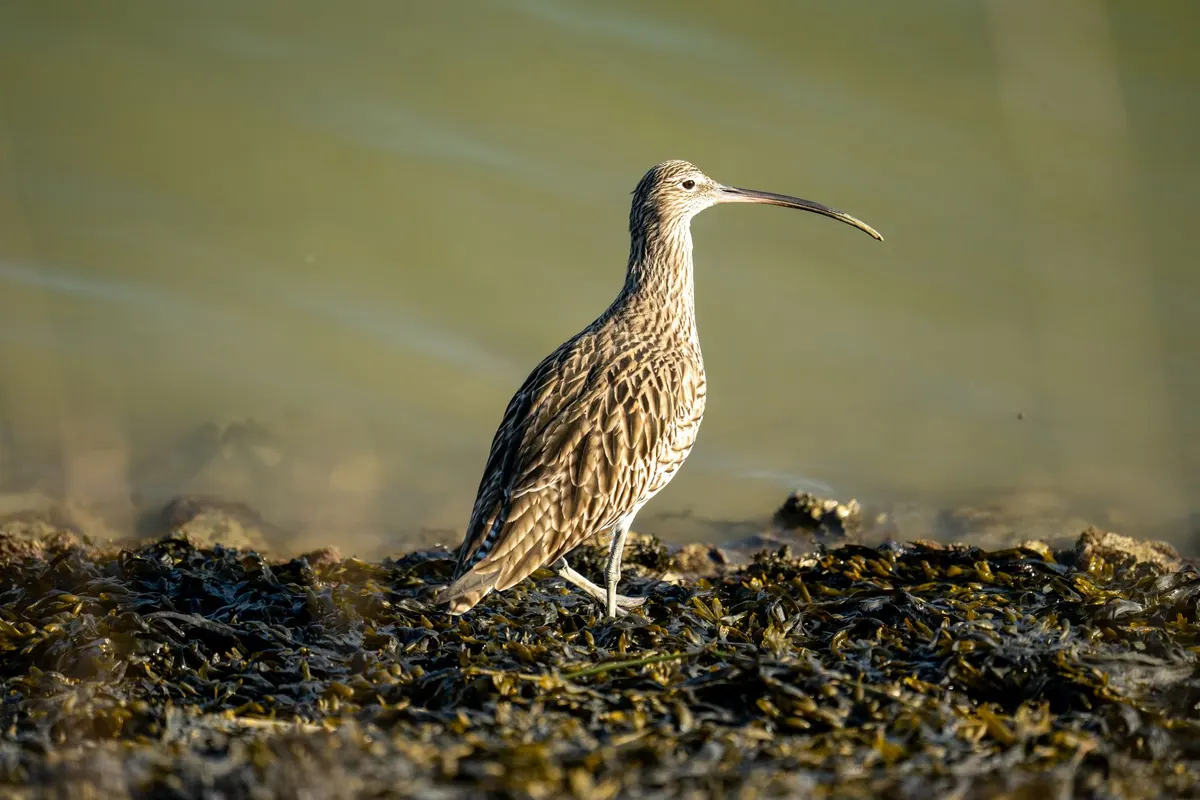
A winter estuary can throw four long-billed, long-legged waders at you in a single sweep of the binoculars, and at first glance they all look like the same bird. Curlew and whimbrel share the same shape and the same curve of bill. Black-tailed and bar-tailed godwit differ by a tail band you cannot see from the front. The trick is not to memorise everything at once. Judge the bill, check the legs, wait for a call, and watch how the bird feeds. Those four things will get you there.
Proportions are the quickest clue, and you can usually judge them before the bird moves. Compare the bill with the head and body rather than trying to guess centimetres at range.
Curlew and whimbrel both have blue-grey legs, with the whimbrel's usually the darker, bluer grey, but do not rely on that on its own. Both godwits have dark, greenish-black legs, so length is the giveaway. Black-tailed godwit stands noticeably leggier than bar-tailed, and those legs trail well beyond the tail in flight.
Black-tailed godwit is the showy one: a bold white wing bar, a white rump and a solid black tail band. Bar-tailed godwit shows a thinner, less obvious wing bar and a white rump that extends in a narrow wedge up the back, with a finely barred tail rather than a solid black band. Summer plumage makes it easier still. Bar-tailed turns deep brick red across the underparts, while black-tailed is bright orange-rufous on the head, neck and breast with a paler belly.
Waders call far more than beginners expect. Learn four sounds and you will identify birds you never manage to see well.
Where a bird is and what it is doing is often the last piece of the puzzle.
Whimbrel is the one to expect on passage rather than in midwinter, so a "curlew" on a rocky shore in May deserves a second look. Curlew is present all year and is the default long-billed wader almost anywhere in Britain. Bar-tailed godwit is chiefly a winter visitor and passage migrant on the coast. Black-tailed godwit winters here too, but spring and autumn birds may be continental migrants heading further south, while the Icelandic population settles in for the winter. Many carry colour rings, and noting down the combination is a genuinely useful thing to do.
Start with the easy version of each bird. A summer-plumaged black-tailed godwit, a whimbrel calling overhead, a curlew on a moorland fence post: learn those first, and the grey-brown winter birds on a distant mudflat will fall into place sooner than you expect. If you remember only two rules, make them these. A long bill on grey legs means curlew or whimbrel, and a white wing bar with a black tail band means black-tailed godwit.
Photo: 3503898 / Pixabay

A practical checklist for photographing birds without causing harm, covering fieldcraft, distance, nesting season,...

A practical method for recording behaviour, weather, sketches and calls in a birdwatching notebook — and for...
Copyright © 2026 Plume Loop. All Right Reserved.