Ethical Bird Photography: A Checklist for Getting Close Without Causing Stress
September 28, 2026 - Photography
A hard frost, a low tide and a flat grey sky. That is the recipe for some of the best birding of the year, and it happens in the least fashionable months. Trees are bare, the summer crowds have gone, and our wetlands fill up with birds that have flown in from Iceland, Scandinavia, Siberia and the high Arctic. A single estuary at low water can hold more birds than the same stretch of coast in June.
What follows is a working checklist of twenty species — the ones most likely to turn a cold hour at a reservoir, marsh or estuary into a proper session. Print it, tick as you go, and do not worry about the ones you miss. A few of these birds are genuinely difficult, and that is half the appeal.
Whooper Swan. Big, upright, neck held straight, with a wedge of yellow running forward on a black bill. Listen for a loud, bugling call that carries for miles. Family parties arrive from Iceland and often stay on the same reservoir all winter.
Bewick's Swan. Smaller and neater, with a rounded patch of yellow that stops well short of the bill tip. Scarcer than the whooper, and more often found on floods and wet grassland than on open water.
Pink-footed Goose. A small, dark-billed grey goose with a pink band on the bill and pink legs. Look for V-shaped skeins and listen for a high, yapping call before you see anything at all.
Brent Goose. Compact and dark, with a white stern and a small white neck patch on the dark-bellied birds. Almost always coastal, grazing saltmarsh and eelgrass, flying low in loose lines.
Wigeon. The whistler of winter wetlands. Males show a chestnut head with a cream crown stripe. They graze grass like geese, so check flooded pasture and grassy banks as well as the water itself.
Teal. Our smallest duck, and one of the fastest in flight — twisting, banking, usually in tight groups. The male has a chestnut head with a green eye patch; the call is a sharp, clipped "prip".
Pintail. Slim, elegant and oddly long-tailed, feeding by upending in shallow water. They tend to sit well out, so scan the far side of a reservoir with a scope rather than walking round the edge.
Shoveler. Impossible to misidentify once you see the enormous bill. Groups often swim in slow circles with bills sweeping side to side, stirring up food — a behaviour worth stopping to watch.
Goldeneye. A small, compact diving duck. Males are black and white with a round white cheek patch; females have a chocolate head and an orange-banded bill. Winter courtship involves repeated head-throwing, which is easy to spot on calm water.
Smew. The male, the "white nun", is dazzling; females and immatures are redheads with a clean white throat. Genuinely scarce, but a cold snap can push a handful inland to quiet, sheltered bays.
Goosander. A sawbill: long, hooked red bill with fine serrations for gripping fish. Males show a bottle-green head and a salmon flush on white flanks. They often hunt in a loose line, driving fish ahead of them.
Lapwing. The peewit, with broad rounded wings and a floppy, unhurried flight. Winter flocks sit on wet meadows and fields, then lift in unison for no reason you can work out. Nothing else quite does that.
Golden Plover. Often mixed in with lapwing. Winter birds are greyer and more upright than their summer selves. Learn the thin, mournful whistle and you will find them before you see them.
Dunlin. Small, greyish, with a slightly downcurved bill, and the default small wader on many estuaries. Watch one feeding at the tide edge: the sewing-machine action is unmistakable.
Knot. Chunky and short-billed, arriving in enormous flocks that pack into tight roosts when the tide covers the mud. Early in the winter, look for a pinkish flush on the chest.
Bar-tailed Godwit. Long, distinctly upturned bill, pale pinkish tones in winter, usually feeding right at the water's edge. The straighter-billed black-tailed godwit is happier on freshwater and damp fields.
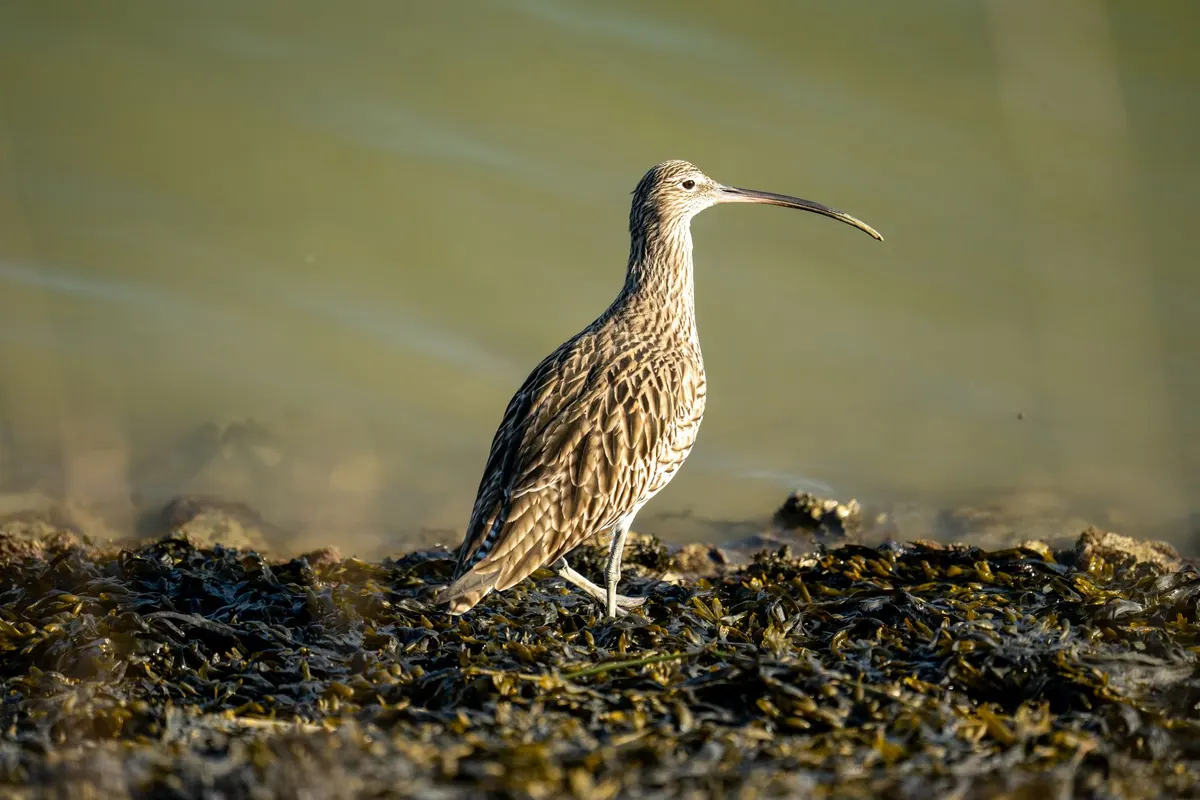
Curlew. The largest of the lot, with a long decurved bill and a bubbling, sinewy call that defines a winter estuary. Give yourself time to learn it by sound; it will save you endless scanning.
Bittern. A big, streaked, buff-brown heron that most people hear booming in spring and never see. In winter, a run of hard frosts concentrates birds at the last patches of open water, which is often the best chance you will get all year. Stand still, scan for a vertical shape, and watch for the slow swaying that mimics the reeds.
Water Rail. Heard far more often than seen. A pig-like squeal from deep cover is the usual record. A clear channel or an ice-free pool at first light gives you a genuine chance of one scuttling across.
Bearded Tit. Not a tit at all — bearded reedling is the better name. Listen for a metallic "ping", then look for small, long-tailed birds on reed seed heads, usually on still, frosty mornings.
Photo: 70154 / Pixabay

A practical checklist for photographing birds without causing harm, covering fieldcraft, distance, nesting season,...
Bill length, leg colour, call and habitat are enough to separate curlews, whimbrels and both godwits. A practical...
Copyright © 2026 Plume Loop. All Right Reserved.